What Is a Driver Evaluation?
A driver evaluation is an assessment performed by a qualified driving rehabilitation professional to evaluate a person’s ability to operate a motor vehicle safely. A Certified Driver Rehabilitation Specialist (CDRS) may assess physical abilities, vision, perception, attention, reaction time, and other skills related to driving.
The goal is to understand an individual’s driving abilities and determine whether adaptive equipment, specialized training, vehicle modifications, or other recommendations may be appropriate.
Who Can Benefit From a Driver Evaluation?
A driver evaluation may be helpful for individuals who:
Have a physical disability or mobility limitation that affects driving.
Have experienced an injury or medical event that has changed their driving abilities.
Need adaptive equipment to operate a vehicle.
Are transitioning from standard vehicle controls to specialized driving controls.
Have concerns about their ability to drive safely and independently.
Have been encouraged by a healthcare professional or family member to have their driving abilities assessed.
A qualified driving rehabilitation professional can help determine whether an evaluation is appropriate and what it should include.
What Should I Expect During a Driver Evaluation?
A comprehensive driver evaluation may include two main components, depending on the individual’s needs.
Clinical Assessment
The clinical portion evaluates abilities that contribute to safe driving. This may include:
Physical function and range of motion
Vision and visual processing
Perception and attention
Coordination and motor function
Reaction time and other relevant cognitive skills
Behind-the-Wheel Assessment
When appropriate, the evaluation includes an on-road or behind-the-wheel assessment. The specialist observes driving performance and evaluates how the individual manages vehicle controls, responds to traffic conditions, and performs driving tasks.
The evaluator may recommend standard driving, adaptive equipment, additional training, further assessment, or other next steps. The length of the evaluation varies depending on the individual’s circumstances.
What Adaptive Driving Equipment Might I Need?
The right equipment depends on your abilities, driving goals, and vehicle requirements. A driving rehabilitation professional can evaluate your needs and recommend suitable adaptive equipment.
Hand Controls
Hand controls allow drivers to operate certain vehicle functions, such as acceleration and braking, using their hands instead of their feet.
High-Tech Electronic Driving Systems
Specialized electronic systems can provide alternative ways to operate vehicle functions for individuals who cannot use conventional controls.
Wheelchair-Accessible Vans
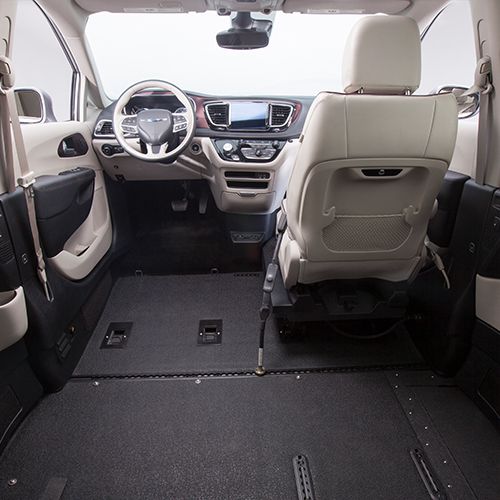
A wheelchair-accessible van may allow a person to drive from their wheelchair or travel as a passenger. Depending on the conversion, features may include a lowered floor, an accessible ramp, and additional interior space.
Explore our wheelchair-accessible van inventory to see the vehicles currently listed for sale.
Wheelchair and Scooter Lifts
Vehicle lifts help transport compatible wheelchairs or scooters. The appropriate lift depends on the mobility device, vehicle, weight capacity, and intended use.
Learn more about our available mobility products.
Transfer Seats
A transfer seat can help some individuals move between a wheelchair and a vehicle seat. Suitability depends on the person’s transfer abilities and the vehicle’s configuration.
Wheelchair Securement and Docking Systems
Wheelchair securement systems help secure a wheelchair inside a vehicle. Certain docking systems allow a compatible wheelchair to connect to a designated docking station.
The appropriate equipment should be selected based on professional recommendations, compatibility, and applicable safety requirements.
How Do I Choose the Right Wheelchair-Accessible Vehicle?
Before selecting a vehicle, consider whether you will be driving from your wheelchair, transferring into the driver’s seat, or traveling as a passenger. These decisions can significantly affect which vehicles and conversions are appropriate.
Consider Your Mobility and Seating Needs
The dimensions and weight of the wheelchair user and mobility device can affect interior clearance, seating position, ramp access, and vehicle compatibility.
Before shopping, gather the following measurements:
Seated height: From the floor to the top of your head while seated in your wheelchair.
Wheelchair width: The widest point of the wheelchair, including wheels and other protruding components.
Wheelchair length: The total length of the wheelchair and seated occupant, including footrests and any rear-mounted equipment.
Combined weight: The total weight of the wheelchair user and wheelchair, including relevant accessories.
These measurements can help narrow down suitable options, but vehicle and conversion specifications must still be verified before purchase.
Decide Between Side-Entry and Rear-Entry
Wheelchair-accessible vans are commonly available with side-entry or rear-entry conversions. The best configuration depends on how you plan to use the vehicle, where you park, how many passengers you transport, and your seating requirements.
Explore our available wheelchair vans to compare the vehicles listed in our inventory.
Think About Passengers and Everyday Features
Consider how many people need to travel with you, how frequently you will use the vehicle, and where you will park or store it.
Other features to consider may include backup cameras, power doors, removable seating, rear climate control, and other convenience features. Availability varies by vehicle.
How Much Does a Wheelchair-Accessible Van Cost?
Your budget is an important part of choosing a vehicle. Consider the purchase price, potential financing, insurance, maintenance, and any additional equipment or modifications you may need.
The cost of a wheelchair-accessible van varies based on its make, model, year, mileage, conversion type, and condition.
For more information, read our guide: How Much Does a Wheelchair Van Cost?.
Access Mobility Vans does not provide direct vehicle financing, but we work with Falls Finance Mobility to help customers explore financing options. Contact our team for more information.
What Are My Next Steps?
If you are considering driving a wheelchair-accessible vehicle, start by discussing your needs with a qualified driving rehabilitation professional. They can help determine whether an evaluation is appropriate and recommend adaptive equipment or training when needed.
Once you have a better understanding of your requirements, Access Mobility Vans can help you explore available vehicles and mobility equipment.
Our team can help you review vehicle options, discuss wheelchair-accessible conversions, and identify compatibility questions to address before purchasing.
Ready to explore your options?
Call